Within Saarland UFOs
Why Chladni Took Strange Sky Reports Seriously
Chladni matters because he placed a strange local report inside serious early science rather than modern alien folklore.
On this page
- Chladni and meteoritics
- How the Rastpfuhl account survived
- Science, scepticism and witness reports

Page outline Jump by section
Introduction
Ernst Chladni’s role in the Rastpfuhl story is not that he solved a UFO mystery. It is that he saved an odd Saarbrücken sky report from disappearing into local hearsay by treating it as a report worth recording in serious natural philosophy. In 1826, Chladni published an account of a strange “meteoric” phenomenon seen near Saarbrücken-Rastpfuhl, in what was then a scientific journal, not a sensational pamphlet. That decision is why the case still matters in Saarland’s UFO history: the modern “UFO” label came much later, but the survival of the report depends on Chladni’s habit of collecting awkward witness accounts of sky phenomena before dismissing them.[Wikisource]de.wikisource.orgErnst Florens Friedrich Chladni – WikisourceErnst Florens Friedrich Chladni – Wikisource
For readers interested in Saarland, this makes Rastpfuhl a different kind of case from the familiar twentieth-century flying-saucer file. It belongs to a pre-aviation world in which unusual noises, fireballs, falling stones and violent atmospheric effects were still being debated. Chladni had already helped shift scientific opinion on meteorites by arguing that credible witness testimony, when compared across cases, could point to real physical events even when the explanation was not yet settled. That is the key to his importance here: he preserved the Rastpfuhl report inside an early scientific debate about strange things in the sky, not inside modern alien folklore.[American Museum of Natural History]amnh.orgOpen source on amnh.org.
Chladni and meteoritics
Chladni was already famous for acoustic experiments, especially the patterns now known as Chladni figures, but his lasting relevance to the Rastpfuhl case comes from another field: meteoritics, the study of meteorites. The American Museum of Natural History describes him as the figure who, in 1794, argued that stones and iron masses really could fall from space, producing bright fireballs as they entered the atmosphere. At the time, this was not an easy claim to make. Educated opinion often treated “rocks from the sky” as superstition, because such falls were rarely witnessed by professional scientists and could not be predicted in a laboratory.[American Museum of Natural History]amnh.orgOpen source on amnh.org.
That background helps explain why Chladni took a report from near Saarbrücken seriously. His method was not to accept every marvel at face value, but to compare reports, look for repeated features, and ask whether witnesses might be describing a physical event that science had not yet classified properly. According to AMNH’s account, he searched library sources for eyewitness reports of fireballs and falling rocks, selected those he considered reliable, and used similarities between accounts to argue that the witnesses were not merely repeating folklore.[American Museum of Natural History]amnh.orgOpen source on amnh.org.
This matters because modern readers can easily misread Chladni as either credulous or “proto-UFO” in a twentieth-century sense. Neither label fits well. He was working in a period when meteorites themselves were still controversial. Oxford’s summary of the history of meteorite recognition notes that acceptance depended on several linked developments: Chladni’s 1794 treatise, later meteor observations, chemical analyses, well-witnessed falls, and the discovery of asteroids as a plausible source. In other words, witness reports were one part of a developing scientific chain, not the whole proof.[OUP Academic]oxfordre.comOUP Academic
That same caution should be applied to Rastpfuhl. Chladni’s involvement raises the status of the report as a historical document, but it does not turn the reported object into a proven craft, meteorite, or atmospheric event. It tells us that a leading investigator of meteoric phenomena thought the account was unusual enough to print and preserve.
How the Rastpfuhl account survived
The Rastpfuhl report survived because Chladni put it into print in 1826 under the title “Ueber eine merkwürdige meteorische Erscheinung, am 1. April 1826, nicht weit von Saarbrücken”, in Annalen der Physik und Chemie. Bibliographic listings identify the article in volume 83, pages 373–377, and Wikisource’s Chladni bibliography places it among his many publications on fire meteors, fallen masses, meteor stones and unusual atmospheric or sky phenomena.[JGR Apolda]jgr-apolda.euOpen source on jgr-apolda.eu.
That publication history is the crucial point. Without Chladni, the Rastpfuhl incident would probably be only a local anecdote, if it survived at all. Instead, it entered a journal tradition that also carried Chladni’s longer-running work on fire meteors and fallen substances. Wikisource’s bibliography shows that the Rastpfuhl article sits alongside a dense sequence of Chladni papers on meteor stones, fireballs, fallen masses, native iron, weather-related phenomena and odd reports needing correction or clarification. It was not an isolated curiosity in his career; it was part of a broader collecting and sorting project.[Wikisource]de.wikisource.orgErnst Florens Friedrich Chladni – WikisourceErnst Florens Friedrich Chladni – Wikisource
Modern summaries of the case depend heavily on that printed survival. Recent Saarland-facing coverage by ARD/SR describes journalist Andreas Müller’s research into what may be Germany’s oldest UFO file, centred on the brickmaker Johannes Becker’s 1826 sighting over Rastpfuhl. UFO-oriented reporting by GreWi likewise points back to Chladni’s published account and says the original official file remains missing, which makes the printed Chladni version especially important for anyone trying to reconstruct the event today.[ARD Sounds]ardsounds.deARD Soundsmit dem Journalisten Andreas Müller über UfosARD Soundsmit dem Journalisten Andreas Müller über Ufos
This is why Chladni is more than a footnote. He is the reason the case has a traceable documentary spine. The modern reader can disagree about what Becker and the other witnesses saw, but the discussion is not built solely on late twentieth-century retelling. It reaches back to a named nineteenth-century physicist publishing in a recognisable scientific periodical.
What Chladni preserved, and what he did not
The surviving summaries describe a dramatic local event near Rastpfuhl on 1 April 1826, around four in the afternoon. Johannes Becker, described in later accounts as a brickmaker or stone worker, reportedly heard thunder-like noise and saw a greyish object or form moving near the ground. GreWi’s summary says further witnesses later confirmed the thunder, crashing and rolling sounds, while local Rastpfuhl history pages identify named witnesses and place the episode near the former woodland and today’s Lebacher Landstraße area.[Grewi]grewi.desaarbruecken 1826 deutschlands aelteste ufo akte weiterhin verschollen20200528saarbruecken 1826 deutschlands aelteste ufo akte weiterhin verschollen20200528
Chladni’s preservation, however, did not give later researchers everything they would want. There is no photograph, recovered object, instrument reading, radar track, meteorological station record or independent physical sample. That is not a criticism of Chladni; it is a limitation of the period and of the case. What he preserved was a structured witness report, not a modern investigation file.
This distinction matters because the Rastpfuhl account has often been pulled into modern UFO chronologies. Those chronologies are useful for showing how the case travelled, but they can also flatten the historical setting. The phrase “UFO file” is modern shorthand. In Chladni’s context, the more accurate question was whether a strange report might belong among unusual meteoric, atmospheric or falling-mass phenomena. ARD/SR’s recent presentation frames the case for a modern audience through Müller’s UFO-file research, while Chladni’s own publication title framed it as a remarkable meteoric phenomenon near Saarbrücken.[ARD Sounds]ardsounds.deARD Soundsmit dem Journalisten Andreas Müller über UfosARD Soundsmit dem Journalisten Andreas Müller über Ufos
That difference does not make the case less interesting. It makes it more useful. Rastpfuhl shows how a report can move across categories over time: from local witness event, to nineteenth-century meteoric curiosity, to modern Saarland UFO-history landmark.
Science, scepticism and witness reports
Chladni’s importance lies in his attitude towards difficult testimony. He did not live in a world where every unusual sky report could be checked against flight paths, satellite trackers, weather radar, dashcam footage or all-sky camera networks. His problem was harder: how should science treat reports from ordinary people when the reported event was rare, brief and not repeatable? AMNH’s account of his meteorite work says many scientists dismissed his early arguments because they relied on eyewitness testimony, but later falls, chemical analyses and official investigations helped vindicate the broader meteorite claim.[American Museum of Natural History]amnh.orgOpen source on amnh.org.
That history gives a fairer framework for Rastpfuhl than either blind belief or quick debunking. Chladni’s method suggests three useful questions: whether the witnesses were reporting something directly observed; whether the details resemble known natural phenomena; and whether independent evidence exists beyond memory and retelling. For meteorites, those questions eventually produced stronger evidence: recovered stones, chemical signatures, mapped fall fields and repeated well-witnessed events. For Rastpfuhl, the chain remains much thinner.[American Museum of Natural History]amnh.orgOpen source on amnh.org.
The best sceptical reading is therefore cautious rather than dismissive. The report may describe a rare atmospheric phenomenon, a meteor-related event with unusual sound effects, a localised whirlwind or some combination of perception, noise and environmental conditions. But the low, object-like description does not fit neatly into a simple meteor explanation, and the absence of physical traces leaves the case unresolved rather than solved.
Chladni’s presence also warns against a common modern mistake: treating old cases as if they were written in today’s categories. A nineteenth-century “meteoric” report did not necessarily mean a meteor in the narrow modern sense, just as a modern “UFO” does not automatically mean an alien spacecraft. In both cases, the safer meaning is descriptive: something was reported in the sky or air that the observers did not clearly identify.
Why Chladni’s role matters for Saarland
Within Saarland’s UFO history, Chladni gives the Rastpfuhl case its historical weight. Saarland does not have a large public record of famous pilot interceptions or radar-linked UFO incidents. Its strongest historical claim rests instead on this older, stranger, more ambiguous episode near Saarbrücken. The case matters because a major figure in the early science of meteoritics considered it worth documenting, and because that printed record allowed the story to survive long enough to be re-examined by later local historians, UFO researchers and journalists.[ARD Sounds]ardsounds.deARD Soundsmit dem Journalisten Andreas Müller über UfosARD Soundsmit dem Journalisten Andreas Müller über Ufos
That does not mean Rastpfuhl should be advertised as proof of non-human technology. A balanced Saarland reading should say something more precise: the case is historically significant, unusually early, and better preserved than many local legends because Chladni published it; but its evidential strength remains limited by missing original records, nineteenth-century reporting standards, and the lack of physical corroboration. GreWi’s note that the original file is still reported as missing underlines why the Chladni publication carries so much weight and why it cannot bear more certainty than it contains.[Grewi]grewi.desaarbruecken 1826 deutschlands aelteste ufo akte weiterhin verschollen20200528saarbruecken 1826 deutschlands aelteste ufo akte weiterhin verschollen20200528
Chladni’s role is therefore best understood as preservation, not confirmation. He kept the Rastpfuhl report inside a serious conversation about strange sky phenomena at a time when such testimony could easily have been ignored. For a modern Saarland UFO page, that is the real value of the case: it shows how one local witness report became historically durable because a scientist known for taking difficult evidence seriously decided it deserved a place in the record.
Amazon book picks
Further Reading
Books and field guides related to Why Chladni Took Strange Sky Reports Seriously. Use these as the next step if you want deeper reading beyond the article.
The Book of the Damned
Provides historical perspective on collecting unexplained observations.
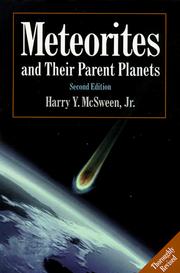
Meteorites and their parent planets
Directly supports Chladni's pioneering work in meteoritics.
eBay marketplace picks
Marketplace Samples
Example marketplace items related to this page. Use the search link to explore similar finds on eBay.

Endnotes
1.
Source: de.wikisource.org
Title: Ernst Florens Friedrich Chladni – Wikisource
Link:https://de.wikisource.org/wiki/Ernst_Florens_Friedrich_Chladni
2.
Source: amnh.org
Link:https://www.amnh.org/learn-teach/curriculum-collections/cosmic-horizons-book/ernst-chladni-meteoritics
3.
Source: oxfordre.com
Title: OUP Academic
Link:https://oxfordre.com/planetaryscience/display/10.1093/acrefore/9780190647926.001.0001/acrefore-9780190647926-e-262?d=%2F10.1093%2Facrefore%2F9780190647926.001.0001%2Facrefore-9780190647926-e-262&p=emailAqtN1HoRqlE8s
4.
Source: jgr-apolda.eu
Link:https://www.jgr-apolda.eu/index.php?topic=10720.15
5.
Source: grewi.de
Title: saarbruecken 1826 deutschlands aelteste ufo akte weiterhin verschollen20200528
Link:https://www.grewi.de/saarbruecken-1826-deutschlands-aelteste-ufo-akte-weiterhin-verschollen20200528/
6.
Source: rastpfuhl.info
Link:https://www.rastpfuhl.info/Anekdoten/Anekdoten.html
7.
Source: rastpfuhl.info
Link:https://www.rastpfuhl.info/Geschichte/Geschichte2.html
8.
Source: rastpfuhl.info
Title: 11.1 Individualverkehrsinfrastruktur
Link:https://www.rastpfuhl.info/Verkehr/Indiviualverkehr.html
9.
Source: saarland.de
Link:https://www.saarland.de/SharedDocs/Downloads/DE/agsb/Gerichtsvollzieher/Stra%C3%9Fenverzeichnis.pdf?__blob=publicationFile&v=8
10.
Source: ardsounds.de
Title: ARD Soundsmit dem Journalisten Andreas Müller über Ufos
Link:https://www.ardsounds.de/episode/urn%3Aard%3Aepisode%3Abd318cedd29d5f4b/
11.
Source: Wikipedia
Link:https://de.wikipedia.org/wiki/Rastpfuhl
12.
Source: saarbruecken.de
Title: download 5ea467d344d22
Link:https://www.saarbruecken.de/media/download-5ea467d344d22
Additional References
13.
Source: youtube.com
Link:http://www.youtube.com/watch?v=OZzlB27wVdg
14.
Source: youtube.com
Link:http://www.youtube.com/watch?v=6lF0siYYZmg
15.
Source: youtube.com
Title: The Man Who Proved Meteorites Are Real!
Link:http://www.youtube.com/watch?v=G1_o7Rf0EO8
16.
Source: lsvs.de
Link:https://www.lsvs.de/fileadmin/user_upload/SaarSport-Magazin/2022/saarsport_06_2022_proof.pdf
17.
Source: e-rara.ch
Link:https://www.e-rara.ch/download/pdf/5261188.pdf
18.
Source: rand.org
Link:https://www.rand.org/content/dam/rand/pubs/papers/2008/P3108.pdf
19.
Source: dentumed.de
Link:https://dentumed.de/default-wAssets/docs/aerzteverzeichnisse/Aerzteverzeichnis-Saarbruecken-Regionalverband.pdf
20.
Source: facebook.com
Title: on this day in 1826 april 1 1826 400 pm stone mason johannes becker hears a nois
Link:https://www.facebook.com/centerforufostudies/posts/on-this-day-in-1826-april-1-1826-400-pm-stone-mason-johannes-becker-hears-a-nois/414070321343289/
21.
Source: forum.hackliberty.org
Title: ufo uap event chronology part 1 distant past up to and including 1949
Link:https://forum.hackliberty.org/t/ufo-uap-event-chronology-part-1-distant-past-up-to-and-including-1949/132/
22.
Source: youtube.com
Title: Ernst Chladni: Revealing the Patterns of Sound and Space
Link:http://www.youtube.com/watch?v=fE5U4EIJIro
Topic Tree
Follow this branch
Parent topic
Saarland UFOsRelated pages 11
- Aviation How Border Skies Complicate Saarland UFO Reports
- Case Ratings How Strong Are Saarland's UFO Cases?
- Common Causes Why Ordinary Lights Look Strange Over Saarland
- Explanations Meteor, Whirlwind or Something Else?
- Media Memory How Saarland's UFO Story Stayed Alive
- Missing File How Much Did the Lost File Matter?
- Modern Reports How Often Are UFOs Reported in Saarland?
- Phone Footage When the Camera Creates the UFO
- +3 more in sidebar