Within Saarland UFOs
Meteor, Whirlwind or Something Else?
Meteors, whirlwinds and debris can each explain part of the story, but none settles the whole report.
On this page
- Meteor and fireball possibilities
- Whirlwind and debris scenarios
- Why no explanation is decisive

Page outline Jump by section
Introduction
The Rastpfuhl anomaly is best treated as a historical puzzle with several ordinary explanations in play, not as a settled UFO case. The report, associated with Saarbrücken-Rastpfuhl on 1 April 1826 and later published by Ernst Chladni in Annalen der Physik und Chemie, describes a sudden thunder-like disturbance, a low grey object or mass seen by Johannes Becker, and effects later interpreted as a violent gust or whirlwind. Modern summaries note that the original official file is missing, which makes every explanation provisional rather than conclusive.[JGR Apolda]jgr-apolda.euJGR Apoldamal wieder Chladni[1] Chladni… [49] Chladni Ernst F.F., (1826), Ueber eine merkwürdige meteorische Erscheinung, am 1. April…
The most sensible question is therefore not “Was it a UFO?” but “Which natural mechanism best fits the details?” A meteor or fireball can explain loud detonations and a sudden startling event. A whirlwind can explain low movement, debris and localised ground effects. Loose material caught in a gust can explain a grey, sheet-like shape. Yet each explanation leaves something awkward: the reported low altitude, the duration, the lack of a clear luminous fireball, and the way different witnesses appear to have noticed different parts of the incident.
Why natural explanations matter here
Rastpfuhl matters within Saarland’s UFO history precisely because it predates aircraft, drones, satellites, radar, photography and the modern language of extraterrestrial visitation. The report sits in an older scientific world, where strange sky events were often discussed under the broad heading of meteors, atmospheric effects or unusual weather. That is why Chladni’s role is important. He was not a modern UFO promoter; he was one of the key early figures in the scientific acceptance of meteorites as real objects from space. The American Museum of Natural History notes that Chladni argued in 1794 that rocks and iron masses really could fall from the sky, producing fireballs as they entered the atmosphere, a view initially met with scepticism but later vindicated by chemical analysis and witnessed falls.[American Museum of Natural History]amnh.orgOpen source on amnh.org.
This cuts both ways. Chladni’s involvement gives the report more historical weight than a loose village legend, because he was scientifically interested in unusual physical events and had experience comparing witness accounts. But it also warns against reading the case backwards through later UFO culture. In the 1820s, a “meteoric” appearance did not necessarily mean what a modern reader means by a meteor; it could cover a wider class of puzzling aerial or atmospheric events. German biographical sources describe Chladni as an experimental physicist who helped place both acoustics and meteorite studies on a new foundation, and whose thinking about meteors grew from the idea that some phenomena came from wider space rather than from ordinary weather alone.[Deutsche Biographie]deutsche-biographie.deOpen source on deutsche-biographie.de.
The evidential problem is simple: the surviving case is mediated. Chladni’s article is identifiable in the 1826 volume of Annalen der Physik und Chemie, with bibliographic listings giving the article as pages 373–377, but later reporting also stresses that the older official file itself has not been found.[jgr-apolda.eu]jgr-apolda.euJGR Apoldamal wieder Chladni[1] Chladni… [49] Chladni Ernst F.F., (1826), Ueber eine merkwürdige meteorische Erscheinung, am 1. April… That means a good natural explanation has to be modest. It can show what is plausible, what is strained, and what evidence would have helped, but it cannot reconstruct the event with laboratory certainty.
Meteor and fireball possibilities
A meteor explanation is attractive because it matches one of the strongest parts of the story: the sudden violent sound. Bright fireballs can produce sonic booms if they penetrate deeply enough into the atmosphere and break apart as bolides. The American Meteor Society explains that very bright fireballs can generate rare sonic booms, usually heard after a delay because sound travels far more slowly than light. It also notes that fireballs capable of dropping meteorites normally have to be unusually bright and still producing visible light at low atmospheric altitudes.[American Meteor Society]amsmeteors.orgAmerican Meteor Society Fireball FAQsAmerican Meteor Society Fireball FAQs
That helps with the Rastpfuhl report in several ways. A daytime or late-afternoon bolide could have startled witnesses with rolling or crashing sounds. A shock wave could be mistaken for thunder on a calm day. In modern cases, people often first suspect explosions, aircraft or earthquakes when a meteor creates a loud boom; the underlying mechanism is still atmospheric rather than local or mechanical. The 1826 date is also not inherently problematic for a meteor: Chladni’s own career was built around collecting and comparing older fireball and meteorite-fall reports, and by the early nineteenth century the scientific case for falling meteorites had strengthened through witnessed events and laboratory analysis.[American Museum of Natural History]amnh.orgOpen source on amnh.org.
The difficulty is that the Rastpfuhl description is not a clean fireball report. Later summaries emphasise a greyish, material-looking object or mass moving very low above the ground, compared to two pieces of sheet metal, rather than a brilliant light crossing the sky.[Reddit]reddit.comOpen source on reddit.com. A meteorite in its final “dark flight” would no longer be glowing and would be falling under gravity, not travelling horizontally at man-height for minutes. The American Meteor Society explains that meteorite remnants normally stop generating visible light high above the ground, then fall invisibly at terminal velocity.[American Meteor Society]amsmeteors.orgAmerican Meteor Society Fireball FAQsAmerican Meteor Society Fireball FAQs That makes a meteor a better fit for the sound than for the whole reported object.
A meteorite fall also ought to leave a different evidential trail if it happened close to observers: a recovered stone, a fall zone, impact marks, or multiple independent observations of a sky track. None is securely attached to the surviving Rastpfuhl story. Chladni’s original interest in “meteoric” phenomena therefore remains relevant, but the meteor reading works best as a partial explanation: something in the sky may explain the thunder-like disturbance, while another local effect may explain the strange low object.
Whirlwind and debris scenarios
The most promising ordinary explanation for the low, close, material-looking part of the report is a small whirlwind carrying dust, straw, leaves, sheet-like debris or loose material from the ground. Modern meteorology gives this mechanism a clear shape. The Met Office describes dust devils as upward-spiralling, dust-filled vortices that can range from a few feet to more than 1,000 feet in height, usually form in dry, strongly heated surface conditions, grow upwards from the ground rather than downwards from clouds, and may carry loose debris such as hay.[Met Office]weather.metoffice.gov.ukMet Office Willy willy, also known as a 'dust devilMet Office Willy willy, also known as a 'dust devil
That is a surprisingly good match for several awkward details. The reported day was described in later retellings as warm, sunny and almost cloudless, which is not a problem for a dust devil; it is close to the kind of fair-weather setting in which such vortices can appear.[Reddit]reddit.comOpen source on reddit.com. A compact rotating column could move near the ground, appear suddenly, make local noise, lift debris, then collapse or move away. If Becker saw a grey, sheet-like mass rather than a tidy column, that may point less to a structured object and more to something being carried or folded by turbulent air.
This explanation also fits the case’s social pattern better than a single exotic object does. Later summaries suggest that several people heard the thunder-like noise, while Becker was the key witness to the low object itself, and others may have confirmed effects of a whirlwind rather than the object.[Reddit]reddit.comOpen source on reddit.com. That division is exactly the kind of thing one might expect from a brief, localised weather event: sound carries, dust and debris may be visible only from one angle, and the most dramatic element may be seen by the person nearest the vortex.
There are still problems. Dust devils are usually short-lived and limited in damage. The Met Office notes that they last only a few minutes because cooler air enters the base of the vortex and cuts off the heat supply; they are generally far less destructive than tornadoes, though rare stronger cases can cause damage or injury.[Met Office]weather.metoffice.gov.ukMet Office Willy willy, also known as a 'dust devilMet Office Willy willy, also known as a 'dust devil Rastpfuhl’s reported crashing or thunderous noise sounds more dramatic than a typical small dust devil. A vortex could perhaps have knocked or dragged loose material, but the louder the report becomes, the more it strains a simple dust-devil explanation unless the sound has been amplified in retelling or combined with another event.
Could it have been both?
The most balanced natural reading is a combination scenario: a distant or high-altitude atmospheric sound, possibly meteoric, coinciding with a local whirlwind or debris event near Becker. That may sound like special pleading, but it reflects a real feature of puzzling historical cases: reports often bundle together what witnesses saw, heard, inferred and later remembered. A sudden boom can make people search the sky or landscape; a moving dust column can then become the visible focus of an event that began as a sound.
Why no explanation is decisive
The reason no explanation settles the Rastpfuhl anomaly is not that the case is uniquely resistant to nature. It is that each natural mechanism fits a different slice of the testimony. The meteor hypothesis fits sound, shock and Chladni’s field of expertise. The whirlwind hypothesis fits the low movement, sunny conditions and possible debris effects. A loose-object hypothesis fits the sheet-like appearance. None comfortably explains every reported detail at once.
The case also suffers from the usual weaknesses of an old anomaly. Dates, wording and witness roles are known mainly through later preservation and summary. The article itself is identifiable in Chladni’s bibliography, and Rastpfuhl local-history material also points back to Chladni’s 1826 Annalen publication, but modern readers are still separated from the original event by translation, selection, interpretation and the loss or absence of associated official records.[Rastpfuhl]rastpfuhl.infoOpen source on rastpfuhl.info.
A decisive explanation would need at least one of the following:<div class="content-enhancement content-enhancement--insight-grid" markdown="1">
- A recovered meteorite or contemporary note of a fall zone near Saarbrücken.
- A fuller official file with witness statements separated by time, location and line of sight.
- A reliable weather reconstruction showing conditions especially favourable, or unfavourable, for a local vortex.
- Local contemporary press accounts that independently describe the same event without later UFO framing.
- Physical details about the alleged debris, ground marks or damage.</div>
Without that, the fairest conclusion is restrained. Rastpfuhl is not strong evidence for a constructed craft or non-human technology. It is also not cleanly debunked as “just a meteor” or “just a whirlwind”. It is a historical anomaly in which ordinary mechanisms explain much of the story, while the surviving record is too thin and too mediated to close the case.
What the natural explanations change
Testing natural explanations changes how Saarland’s best-known historical UFO-adjacent case should be read. It moves Rastpfuhl away from a sensational “oldest UFO” label and towards a more useful category: an early nineteenth-century report of a puzzling physical event, preserved because it caught the attention of a serious scientist interested in meteors and unusual atmospheric phenomena.
That does not make the story dull. It makes it more interesting. A meteor-only reading is too neat. A whirlwind-only reading is also too neat. The report’s value lies in the friction between them: a loud atmospheric disturbance, a low grey object, possible debris effects, multiple witnesses to some parts but not all parts, and an archival gap where the strongest evidence would need to be. For Saarland’s UFO history, Rastpfuhl remains important not because it proves an extraordinary visitor, but because it shows how hard it can be to separate sky phenomena, local weather, witness perception and later interpretation when the case is old, dramatic and only partly preserved.
Amazon book picks
Further Reading
Books and field guides related to Meteor, Whirlwind or Something Else?. Use these as the next step if you want deeper reading beyond the article.
The Demon-Haunted World
Promotes weighing ordinary explanations before extraordinary ones.
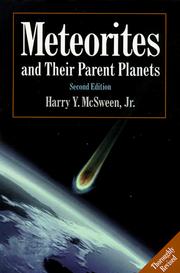
Meteorites and their parent planets
Covers natural explanations relevant to the Rastpfuhl event.
eBay marketplace picks
Marketplace Samples
Live-tested eBay searches with available results related to this page.


Endnotes
1.
Source: jgr-apolda.eu
Link:https://www.jgr-apolda.eu/index.php?topic=10720.15
2.
Source: grewi.de
Title: saarbruecken 1826 deutschlands aelteste ufo akte weiterhin verschollen20200528
Link:https://www.grewi.de/saarbruecken-1826-deutschlands-aelteste-ufo-akte-weiterhin-verschollen20200528/
3.
Source: deutsche-biographie.de
Link:https://www.deutsche-biographie.de/gnd118520490.html
4.
Source: de.wikisource.org
Title: Ernst Florens Friedrich Chladni
Link:https://de.wikisource.org/wiki/Ernst_Florens_Friedrich_Chladni
5.
Source: reddit.com
Link:https://www.reddit.com/r/UFOs/comments/1kbfsh0/germany_1826_physicist_ernst_chladni_describes_a/
6.
Source: rastpfuhl.info
Link:https://www.rastpfuhl.info/Geschichte/Geschichte2.html
7.
Source: reddit.com
Link:https://www.reddit.com/r/UFOs/comments/1kbfsh0/germany_1826_physicist_ernst_chladni_describes_a/?tl=de
8.
Source: reddit.com
Link:https://www.reddit.com/r/meteorites/comments/1s3c3b8/the_american_meteor_society_attempts_to_answer/
9.
Source: grewi.de
Title: fragen zu deutschlands historischen ufo akten20230813
Link:https://www.grewi.de/fragen-zu-deutschlands-historischen-ufo-akten20230813/
10.
Source: rastpfuhl.info
Link:https://www.rastpfuhl.info/Anekdoten/Anekdoten.html
11.
Source: weather.gov
Link:https://www.weather.gov/fgz/DustDevil
12.
Source: focus.de
Link:https://www.focus.de/wissen/weltraum/hunderte-jahre-alt-aelteste-sichtung-1826-deutschlands-geheime-ufo-akten-werfen-fragen-auf_id_41263346.html
13.
Source: amnh.org
Link:https://www.amnh.org/learn-teach/curriculum-collections/cosmic-horizons-book/ernst-chladni-meteoritics
14.
Source: amsmeteors.org
Title: American Meteor Society Fireball FAQs
Link:https://www.amsmeteors.org/fireballs/faqf/
15.
Source: weather.metoffice.gov.uk
Title: Met Office Willy willy, also known as a’dust devil’
Link:https://weather.metoffice.gov.uk/learn-about/weather/types-of-weather/wind/willy-willy
16.
Source: Wikipedia
Title: Ernst Chladni
Link:https://en.wikipedia.org/wiki/Ernst_Chladni
17.
Source: Wikipedia
Link:https://de.wikipedia.org/wiki/Rastpfuhl
18.
Source: Wikipedia
Title: Dust devil
Link:https://en.wikipedia.org/wiki/Dust_devil
19.
Source: weather.metoffice.gov.uk
Link:https://weather.metoffice.gov.uk/learn-about/met-office-for-schools/other-content/other-resources/extreme-weather
20.
Source: amsmeteors.org
Title: ams q1 2026 fireball analysis
Link:https://amsmeteors.org/ams-q1-2026-fireball-analysis.html
Additional References
21.
Source: youtube.com
Title: The Tunguska Object
Link:https://www.youtube.com/watch?v=vOLMIEggAGE
22.
Source: youtube.com
Title: The Road to Recognition
Link:https://www.youtube.com/watch?v=JR7epn_qdR0
23.
Source: academia.edu
Link:https://www.academia.edu/49227787/Unicode_v_13_14_and_Slavic_Philology_Status_Quo_Updates_Open_Problems
24.
Source: researchgate.net
Link:https://www.researchgate.net/publication/230487321_Ernst_Florens_Friedrich_Chladni_1756-1827_and_the_origins_of_modern_meteorite_research
25.
Source: naturalis.nl
Link:https://www.naturalis.nl/en/science/dutch-meteorites
26.
Source: facebook.com
Link:https://www.facebook.com/Saarlandwelle/posts/ein-ufo-%C3%BCber-saarbr%C3%BCcken-das-hat-der-saarl%C3%A4nder-andreas-m%C3%BCller-bei-seinen-intens/1319840466970463/
27.
Source: meteorite-recon.com
Link:https://www.meteorite-recon.com/home/meteorite-documentaries/meteoritica
28.
Source: facebook.com
Link:https://www.facebook.com/KOLDNews/posts/the-american-meteor-society-said-that-the-booms-people-heard-were-actually-cause/1336370848593113/
29.
Source: facebook.com
Link:https://www.facebook.com/metoffice/videos/dust-whirl-in-basingstoke/10151825033619626/
30.
Source: academia.edu
Link:https://www.academia.edu/43868466/UFOs_and_Intelligence_A_Timeline_By_George_M_Eberhart
Topic Tree
Follow this branch
Parent topic
Saarland UFOsRelated pages 11
- Aviation How Border Skies Complicate Saarland UFO Reports
- Case Ratings How Strong Are Saarland's UFO Cases?
- Chladni Why Chladni Took Strange Sky Reports Seriously
- Common Causes Why Ordinary Lights Look Strange Over Saarland
- Media Memory How Saarland's UFO Story Stayed Alive
- Missing File How Much Did the Lost File Matter?
- Modern Reports How Often Are UFOs Reported in Saarland?
- Phone Footage When the Camera Creates the UFO
- +3 more in sidebar